Cheap Printed Wraps vs Quality Prints: 4 Signs You’re About to Get Burned


Imagine investing in a vibrant vehicle wrap, only to watch it fade, peel, or lose its appeal within just a few months. You want your car to stand out, but instead, you’re left disappointed. Many car owners regret their decision after seeing that their investment didn’t add value or lasting style. That’s why it’s crucial to understand the difference in the debate of Cheap Printed Wraps vs Quality Prints: 4 Signs You’re About to Get Burned. There are clear warning signs that can help you avoid getting stuck with a poor-quality wrap. Choose quality prints to protect your investment, enhance your vehicle’s appearance, and ensure your wrap lasts.
Consider these facts:
|
Type of Vinyl |
|
|---|---|
|
Cast Vinyl |
5-7 years |
|
Calendared Vinyl |
2-3 years |
Making the right choice means you’ll enjoy long-lasting value and a professional look for your car.
Key Takeaways
-
Buy good vehicle wraps so they last longer and stay bright.
-
Watch out for bad print quality, like blurry or pixelated spots, to avoid bad wraps.
-
Pick wraps made with cast vinyl and pigment-based inks for stronger wraps and colors that last.
-
Make sure your wrap provider uses lamination to keep the wrap safe from sun, rain, and scratches.
-
Look for strong adhesive and good installation so the wrap does not peel or bubble.
-
Ask about seam planning and how they install wraps to make sure it looks smooth and neat.
-
Ask to see samples and photos of their past work to check the wrap quality.
-
Remember, buying good wraps saves money later because you will not need as many repairs or new wraps.
Cheap Printed Wraps vs Quality Prints: What’s the Real Difference
When you look at vehicle wraps, there is more to think about than just price. You want your wrap to last a long time and look good. It should also make your car look professional. To get this, you need to know what makes high quality printed photograph wraps different from cheap vehicle wraps.
Cheap Vehicle Wraps: Materials and Inks
Calendar vs Cast Vinyl
The kind of vinyl used matters a lot for your wrap. Cheap wraps usually use low-quality vinyl like calendared vinyl. This type is stiff and does not stretch much. It can crack and shrink fast, especially in sunlight. Cast vinyl is used for quality wraps. It is flexible and fits the shape of your car. It does not fade easily and lasts longer.
|
Feature |
Cheap Printed Wraps |
Quality Prints |
|---|---|---|
|
Canvas Material |
Often synthetic (e.g., polyester) |
Natural fibers (e.g., cotton, linen) |
|
Ink Type |
Dye-based inks |
Pigment-based inks |
|
Durability |
Shorter lifespan, fade susceptibility |
Superior longevity, fade resistance |
|
Cost Implications |
Lower cost, suitable for temporary use |
Higher cost, justified for permanence |
|
Aesthetic Appeal |
Less authentic texture |
Authentic artistic texture |
You can see that bad vinyl and cheap inks make wraps fade and peel fast. They also lose their shine quickly. Good wraps use cast vinyl and pigment-based inks. This keeps the printed image bright and colorful.
Ink Quality
Cheap wraps use dye-based inks. These inks fade fast and do not do well in sunlight. Quality prints use pigment-based inks. These inks keep colors bright and do not fade easily. The best results come from using solvent or eco-solvent inks.
Lamination and Quality Control
Skipped Lamination
Lamination is a layer that protects your wrap from sun, rain, and scratches. Cheap wraps often skip lamination to save money. Without it, your wrap will not last long. Good wraps always have a strong laminate to keep them looking new.
Poor QC Practices
Quality control is important for good wraps. Cheap wraps often have poor quality control. You might see bubbles, wrinkles, or peeling edges. Good wraps are checked carefully to make sure they meet high standards.
Tip: Always ask how they check print quality. A good provider will explain their process.
-
Quality control helps wraps stick well and last longer.
-
The right laminate makes your wrap last even more.
When you pick quality, you get a wrap that lasts and looks great. Cheap wraps may seem cheaper now, but they cost more later. Choose high standards for your car and your brand.
Sign #1: Low Resolution, Artifacts, Banding

Print Quality Issues
You want your vehicle wrap to look sharp and clear. Cheap wraps often look blurry and fuzzy. Sometimes you see weird lines or unclear pictures. These problems happen when the printer uses low resolution. If photos look soft or pixelated, the print is not good. A photographer wants crisp images, but cheap wraps do not deliver.
Blurry Images
Blurry pictures make your car look bad. You might expect a photo to stand out, but it looks faded. This happens when the printer cannot use good files. Photographers would not accept blurry images. You should not accept them on your car.
Visible Banding
Banding means stripes or lines show up on the wrap. These lines mess up the smooth look of a photo. You may see them in big color areas or gradients. Banding happens when the printer uses poor settings or runs out of ink. Photographers know banding ruins pictures.
Pixelation
Pixelation shows tiny squares instead of smooth edges. You see this problem in text, logos, or detailed photos. Cheap wraps have pixelation because the printer used low resolution. Photographers spot pixelation quickly. Always check for pixelation before you get a wrap.
Tip: Ask for a sample print before you buy. Look at the photo details and compare them to what a photographer wants. If you see blurriness, banding, or pixelation, do not buy.
Impact on Appearance
Bad printing makes your brand look weak. People judge your business by your car’s look. If your wrap has blurry photos or strange marks, people may think you do not care. Photographers know first impressions matter. You want your car to look professional and honest.
Cheap wraps have other problems too. Uneven thickness can change colors and make wrapping hard. Bad glue can cause the edges to lift, making the wrap look worse. Fewer finish choices and short warranties make things risky.
A good wrap shows your brand with sharp photos and bright colors. You want people to remember your car for good reasons. Do not let bad prints hurt your reputation. Pick a provider who knows what a photographer wants and gives you lasting results.
Sign #2: Weak Blacks, Muddy Gradients, Bad Skin Tones
Color Problems in Cheap Wraps
You want your vehicle to look sharp and eye-catching. When you choose cheap wraps, you often see color problems that ruin the effect. Weak blacks, muddy gradients, and bad skin tones stand out as clear signs of low-quality prints.
Faded Blacks
Blacks should look deep and bold. If you see faded blacks, your wrap loses impact. Weak blacks make logos and text look washed out. Your message blends into the background. People may not notice your brand at all.
Poor Gradients
Smooth gradients show skill and attention to detail. Cheap prints often have muddy or streaky gradients. You see harsh lines instead of smooth color changes. This problem makes your wrap look messy and unprofessional. Your design loses its clean look.
Off Skin Tones
Skin tones matter for wraps with people or faces. Bad skin tones look orange, green, or gray. This mistake makes photos look unnatural. Customers may question your attention to detail. You want your images to look real and inviting.
A crisp, well-applied wrap communicates expertise, attention to detail, and reliability. Conversely, peeling or inconsistent graphics suggest that corners may be cut elsewhere.
Why Color Quality Matters
Color quality sets your brand apart. If your wrap has strong blacks, smooth gradients, and natural skin tones, you show customers that you care about quality. People judge your business by what they see on your vehicle.
-
A FedEx Office consumer survey indicates that 68% of customers believe the quality of a business’s signage reflects the quality of its products or services.
-
Poor color quality makes your brand look weak and forgettable.
-
Customers trust brands that look professional and polished.
-
Without proper contrast, even the best brand colors can fade into the background, especially when the vehicle is in motion.
-
Too many colors competing for attention can weaken the message, making it less effective.
You want your wraps to stand out and grab attention. Strong color quality helps your brand stay memorable. When you invest in quality, you protect your reputation and attract more customers. Cheap wraps with color problems send the wrong message. Choose prints that show your business at its best.
Sign #3: Poor Adhesive, Edge Lift
Adhesion Issues in Cheap Vehicle Wraps
You want your vehicle to look sharp and stay protected. When you choose cheap wraps, you risk facing serious adhesive problems. These mistakes can ruin your investment and lead to hidden costs that keep adding up.
Peeling Edges
Peeling edges are one of the first signs of trouble. You might see corners or deep recesses start to lift. This happens when installers skip adhesive promoters or use low-quality vinyl. Shrinkage from poor materials also causes early peeling. Once the edges lift, water and dirt sneak under the wrap. This weakens the bond and makes the problem worse.
-
Early peeling and fading from low-quality vinyl
-
Shrinkage causing wrap to pull away from the surface
Bubbles and Wrinkles
Bubbles and wrinkles show that the wrap did not stick right. These mistakes often come from rushing the job or skipping steps. You may notice air pockets or uneven spots. These flaws make your wrap look messy and unprofessional. They also create weak points where the wrap can start to fail.
Residue Problems
When a wrap does not stick well, it can leave sticky residue behind. This mess is hard to clean and can damage your paint. You want a wrap that comes off clean when it is time for a change. Cheap prints often leave you with more work and more hidden costs.
Tip: Always check the edges and corners during installation. A professional installation will use the right tools and heat to secure every edge. This prevents lifting and keeps your wrap looking fresh.
Cost of Fixing Adhesive Failures
Adhesive failures do not just look bad. They cost you money and time. When edges lift, the wrap loses its protective power. The exposed adhesive and paint face rain, sun, and dirt. Over time, this leads to more peeling and bigger repairs.
-
Professionals use re-adhesion techniques to fix loose edges.
-
Specialized tools and heat help reactivate the adhesive for a strong bond.
-
Edge lifting exposes your vehicle to damage and speeds up wrap failure.
You do not want to pay for costly mistakes that could have been avoided. Hidden costs add up fast when you need repairs or a full replacement. Choose quality wraps and professional installation to avoid these problems. You protect your vehicle, save money, and get results that last.
Mistakes with adhesive can ruin your wrap and your budget. Watch for peeling, bubbles, and residue. Ask your installer about their process and make sure they use the right materials. Avoid hidden costs by choosing quality and demanding professional results.
Sign #4: No Seam Plan, No Install Guidance
Installation Mistakes with Cheap Wraps
Cheap wraps can cause big problems during installation. If there is no seam plan or clear steps, your car may look messy. You want your wrap to fit well, but poor planning makes this hard to fix.
Missing Seam Planning
Seam planning helps wraps look smooth and neat. If the installer skips this, you might see lines or edges that do not match. Good seam planning means measuring, checking around handles, and using practice layouts. Without it, wraps can look crooked or stretched.
Lack of Instructions
Good wraps come with clear, step-by-step instructions. Cheap wraps often do not. This makes installers guess and rush, which leads to mistakes. You want your installer to use the right templates and tips to keep things straight.
Untrained Installers
Installers without training make expensive mistakes. They might not clean the car, stretch the vinyl too much, or forget to use heat. These errors cause bubbles, peeling, and weak spots. Rushing or cutting carelessly leaves rough edges.
Tip: Ask if installers have training and follow a set process. Skilled teams take off mirrors, use tape to mark, and seal corners for a strong finish.
Risks of Poor Installation
Bad installation does more than look bad. It can hurt your car and waste your money. You might see the wrap lift, bubbles form, or edges peel. It is hard to fit wraps around curves if done wrong.
-
Bad installation can harm your paint and leave sticky glue.
-
Bubbles and rough cuts make your car look unprofessional.
-
Not cleaning or stretching too much makes wraps fail early.
You should get a wrap that looks good and lasts. Always ask these questions before you choose:
-
Do you use cast vinyl and the right steps?
-
Can you show how you plan seams?
-
Do you give clear instructions and templates?
-
Are your installers trained?
-
How do you check the wrap after it is done?
Picking a provider with a seam plan and expert help protects your money. You get a wrap that fits, looks great, and lasts. Do not let cheap work ruin your car. Always ask for professional results.
High-Quality Wrap vs Cheap: Durability and Value
Longevity of Quality Wraps
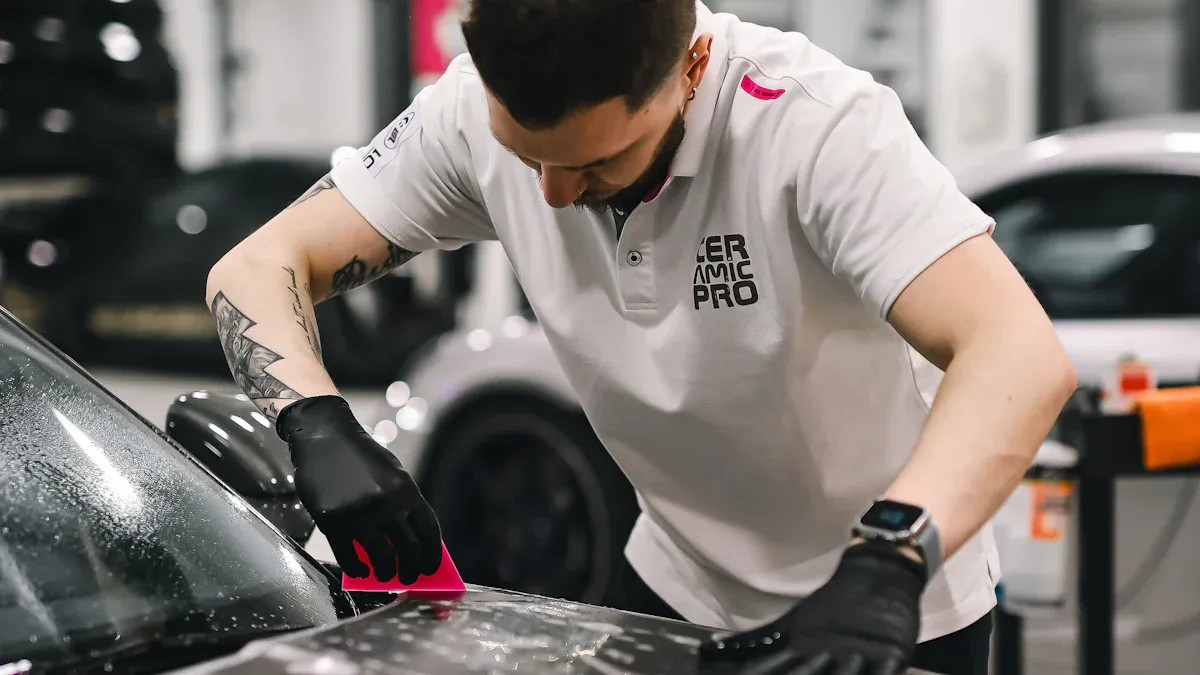
Picking a high-quality wrap means your car looks good for years. Brands like 3M and Avery Dennison make wraps that last five to seven years if you take care of them. Cheap wraps only last one to three years before they start to fade, crack, or peel. If you drive every day or park in the sun, you need a wrap that can handle it. Good wraps fight off damage and keep your car looking nice.
-
A high-quality wrap keeps its color and stays flexible after five years in strong sunlight.
-
Cheap wraps can fade and crack in just two years.
-
Some top vinyl wraps last up to seven years if the weather is mild.
Appearance Over Time
You want your car to look awesome every year. High-quality wraps keep their bright color and smooth look much longer than cheap ones. Cheap wraps lose their shine, fade, or peel fast. With a good wrap, you do not have to worry about fixing it all the time. You get to enjoy your car’s fresh look.
|
Type of Wrap |
Lifespan |
Maintenance Needs |
|---|---|---|
|
High-Quality |
Several years |
Minimal with proper care |
|
Cheap |
Shorter lifespan |
More frequent reapplications |
Good wraps stay looking new for a long time. Cheap wraps might need to be fixed or replaced sooner, which costs more money later.
Cost Savings Long-Term
Getting a high-quality wrap saves you money over time. You do not have to replace it often or pay for big repairs. Good wraps protect your car’s paint, so it is easier to clean and worth more if you sell it. Cheap wraps can hurt your paint or leave sticky stuff behind, which costs more to fix.
|
Benefit |
Quality Wraps |
Cheap Wraps |
|---|---|---|
|
Paint Protection |
Keeps paint safe, less repairs needed |
Might cause expensive paint fixes |
|
Durability |
Lasts 5–7 years, saves money |
Short life, needs more replacements |
|
Ease of Removal |
Comes off clean, helps resale value |
Can damage paint |
|
Maintenance Savings |
Easy to clean, no waxing needed |
Costs more to keep up |
Tip: Pick a pro installer and use top materials for the best wrap. Your wrap will last, look great, and save you money.
When you look at high-quality wraps and cheap prints, the choice is easy. Good wraps mean they last longer, look better, and are worth your money. Make the smart choice for your car and your brand.
Checklist: Print Quality Inspection List
Picking a provider for your vehicle wrap can be tough. You want to avoid mistakes that cost a lot. You also want your wrap to last a long time. Use this checklist to help you find good quality and skip cheap work.
Photos to Request from Providers
Ask for clear photos before you decide. These pictures show real wraps the provider has done. You can see their skill and how good their work is.
|
Description |
|
|---|---|
|
Quality |
Ask what brands they use, like 3M or Avery Dennison. These brands last longer. |
|
Inks and Printers |
Ask for proof they use top inks and printers. This keeps colors bright and strong. |
|
Portfolio |
Look at their portfolio for high-quality wraps. You want to see good results every time. |
|
Before-and-after photos |
Check photos that show the car before and after. This shows their process and finished work. |
|
Warranty |
Make sure they offer a strong warranty for materials and installation. |
|
Aftercare services |
Ask for tips to keep your wrap looking new for years. |
Tip: Real photos, not just computer images, show the true quality you will get.
Key Details to Inspect
When you visit the shop or look at their wraps, check these things:
-
Look at the contract for vinyl brand, lamination, and how long it should last.
-
Make sure the warranty covers problems and early damage.
-
Check that seams line up and there are no bubbles or wrinkles.
-
Make sure the color looks the same everywhere on the wrap.
-
Confirm the car was cleaned and ready before wrapping.
-
Ask to see photos of the wrap after it was put on to spot any problems.
A good wrap should look smooth, bright, and have no seams showing.
Questions to Confirm Quality
Before you agree to anything, ask these questions:
-
What vinyl brand and type do you use—cast or calendared?
-
How many hours will installation take, and is labor listed?
-
Does your price include cleaning and taking off old wraps?
-
What warranties cover your materials and work, and how long do they last?
-
Can you show before-and-after photos of cars you have wrapped?
Asking these questions helps you avoid problems and get the best wrap. You want a wrap that looks awesome and lasts a long time. Use this checklist to protect your money and make your car stand out.
CTA: Quality Promise & Material Specs
When you want your vehicle to stand out and last, you need more than just a good-looking design. You deserve a promise of quality that protects your investment and keeps your car looking sharp for years. The best vehicle wrap provider will always back up their work with clear guarantees and use top materials. This is how you avoid the disappointment that comes with cheap wraps.
Why Material Specs Matter (3M IJ180mC)
Material specs are the backbone of a great wrap. If you want your wrap to last, you need to know what goes on your car. Not all vinyl is the same. Some materials fade, crack, or peel fast. Others stay bright and smooth, even after years in the sun.
3M IJ180mC sets the standard for vehicle wraps. Here’s why this material stands out:
-
3M™ Print Wrap Film IJ180mC is a 2 mil film that bends and stretches to fit any curve.
-
You can slide and reposition it during installation, so it fits perfectly.
-
The Comply™ Adhesive with micro technology lets air escape, so you get a bubble-free finish.
-
This film works on complex curves and contours, making it ideal for cars, trucks, and vans.
When you see 3M IJ180mC in the specs, you know you’re getting a wrap that will look great and last.
How to Verify Quality Providers
You want a provider who stands behind their work. A true quality promise means you get both strong materials and expert installation. Before you choose, ask about their warranties and what they cover. The best providers offer clear coverage for both the product and the installation.
|
Warranty Type |
Coverage Details |
Duration |
|---|---|---|
|
Covers material against fading, cracking, and peeling due to product failure. |
4–8 years |
|
|
Installer’s Warranty |
Covers workmanship and installation issues like lifting and bubbling. |
Varies by provider |
Here’s how you can spot a provider you can trust:
-
Ask for proof of the vinyl brand and model, like 3M IJ180mC.
-
Check if they offer both a manufacturer’s and an installer’s warranty.
-
Look for a clear process and real photos of past work.
-
Make sure they answer your questions and explain their quality promise.
Don’t settle for less. Choose a provider who uses the right materials and stands by their work. You’ll get a wrap that looks amazing and lasts, giving you peace of mind and real value.
You want to protect your investment and impress clients. Cheap printed wraps vs quality prints: 4 signs you’re about to get burned shows you what to avoid. Clients notice low resolution, weak blacks, poor adhesive, and bad installation. Clients expect wraps that last and look sharp. Clients trust brands that care about quality. Clients remember vehicles that stand out. Clients value clear colors and smooth finishes. Clients dislike peeling edges and faded prints. Clients want wraps that boost your business. Clients choose providers who offer strong warranties. Clients rely on your checklist to spot problems. Clients deserve the best. Use the checklist, ask questions, and invest in quality. Your clients will thank you.
Make the smart choice. Invest in quality wraps and give your clients results that last.
FAQ
Can you fix bad prints on vehicle wraps?
You can fix some bad prints by swapping out damaged panels. If the whole wrap has big problems, you might need to redo it all. Always pick a provider who checks their work to stop these issues.
What causes fading on vehicle wraps?
Fading happens when cheap inks or vinyl get too much sun or bad weather. You can protect your wrap by picking materials with UV protection and good lamination. Ask your provider about their ink and vinyl details.
How do I spot low resolution or banding before installation?
Ask for sample prints or close-up photos before you buy. Look for clear pictures and smooth color changes. If you see blurry spots or lines, the print is not good. Always check samples before you decide.
Why do some wraps peel or lift at the edges?
Peeling and lifting happen from weak adhesive or fast, sloppy work. You can avoid this by choosing skilled installers and strong vinyl. Check the edges during install to make sure they stick well.
What does “cheap” mean when it comes to wraps?
Cheap wraps use low-quality vinyl, weak inks, and skip lamination. These shortcuts make wraps fade, peel, and look bad. You get better wraps by paying for good materials and expert work.
How important is seam planning for a vehicle wrap?
Seam planning makes wraps look smooth and neat. Without it, you get lines that do not match and rough edges. Ask your provider how they plan seams before they start.
What warranty should I expect for a quality wrap?
You should get a warranty for both the materials and the install. The best providers cover fading, peeling, and mistakes in the work. Always ask for the warranty details before you buy.
What photos should I request before choosing a wrap provider?
Ask for before-and-after photos, close-ups of seams, and past jobs. These pictures help you see if the provider does good work and makes quality wraps.