The Complete History of the Toyota MR2 from 1984 to 2007


The Toyota MR2 history is a fascinating tale of how this model changed perceptions of affordable sports cars. Introduced in 1984, it featured a lightweight design and exceptional handling. With a 1.6-liter engine producing 112 horsepower, the MR2 could accelerate from 0 to 60 mph in just 8.4 seconds. Weighing around 2,300 pounds, it was both quick and easy to maneuver. Its handling rivaled that of more expensive sports cars, thanks to Toyota’s innovative design, which made it both special and enjoyable to drive. The history of the MR2 illustrates its significant impact on the automotive industry.
Key Takeaways
- The Toyota MR2 came out in 1984 and changed how people saw cheap sports cars. It was light and handled really well.
- The first version (1984-1989) had a mid-engine design. It was fun to drive and won Japan’s Car of the Year award.
- The second version (1990-1999) focused on more power and style. But, it had handling problems that hurt its sales.
- The third version (2000-2007) was simple and light. It was made for people who loved driving more than fancy features.
- Every MR2 model showed Toyota could meet market needs while keeping driving fun.
- The MR2 inspired other carmakers and proved small, cheap cars could be exciting to drive.
- Fans of the MR2 still love it today. Many owners upgrade their cars to make them faster.
- Even though Toyota stopped making the MR2 in 2007, it is still loved for its mix of speed, style, and low price.
Toyota MR2 History: The First Generation (W10, 1984–1989)
How the Toyota MR2 Began
The Toyota MR2 stands for “Midship Runabout 2-Seater.” It first appeared in June 1984. Its story started earlier, in 1976, as a mid-engine project by Toyota engineers. The oil crisis in the late 1970s slowed its progress. Finally, the prototype was shown at the 1983 Tokyo Motor Show. The MR2 was built to be light, affordable, and handle well. This idea excited car fans, and the car became popular after its release.
The first MR2 generation, called the MR2 MK1 or Mark I, was made from 1984 to 1989. It came in three versions with engines like the 1.5-liter 3A-LU and the stronger 1.6-liter 4A-GE. The MR2 Mark I won Japan’s Car of the Year award for 1984-1985, making it a big deal in car history.
Design and Engineering Goals
The first MR2 was designed to be light and balanced. Akio Yoshida and his team focused on a mid-engine layout for better weight balance and handling. The car had five strong bulkheads for safety and strength. It weighed only 977 kilograms, making it fun and easy to drive.
The mid-engine design gave the car a 44:56 weight balance. This helped it turn corners better than other cars like the Fiat X1/9 and Pontiac Fiero. The MR2’s smart engineering made it a top pick for people wanting an affordable sports car.
| Feature | Specification |
|---|---|
| Weight | 977 kg |
| Weight Distribution | 44:56 (front to back) |
| Bulkheads | 5 high-strength bulkheads |
Performance Features
The first MR2 had great performance for its time. The base model had a 1.6-liter 4A-GE engine with 122 horsepower. It went from 0 to 60 mph in 8.2 seconds. A supercharged version came later, with 145 horsepower and a faster 0-60 mph time of 6.9 seconds. Both versions could go over 120 mph, with the supercharged one reaching 130 mph.
The MR2’s light weight and mid-engine design made it better than rivals. It handled better than cars like the Fiat X1/9 and Pontiac Fiero. Its sharp steering and smooth suspension made it fun to drive on twisty roads. These features made it a favorite among drivers and kept its popularity alive.
The first Toyota MR2 generation is an important part of its history. Its smart design, fun driving, and low cost paved the way for future MR2 models.
Market Reception and Legacy
The Toyota MR2 amazed people when it came out in 1985. Reviewers loved its quick moves, light build, and fast speed. These features made it different from other cars in its price range. The car was so popular that some dealers sold it for more than the listed price. This showed how much drivers liked its mix of fun and affordability.
The first MR2 was special because of its unique features. It weighed about 2,400 pounds in its regular versions, making it a light sports car. Its mid-engine design and balanced weight made it handle really well. Drivers enjoyed revving the engine high without going too fast. This made it exciting but also useful for daily driving.
The MR2 competed with cars like the Fiat X1/9 and Pontiac Fiero. But it quickly became better than these rivals. Its smart design and dependability won over many fans. People loved how it gave a sports car feel without costing too much.
The first MR2’s success went beyond just selling well. It proved that a mid-engine sports car could be cheap and dependable. This idea changed how future sports cars were made. It showed that speed and everyday use could go together. The MR2 also created a strong fan base. Owners and fans still admire its clever design and fun driving experience.
The Toyota MR2’s story shows its big impact on cars. Its first version set a high standard for affordable sports cars. By mixing speed, style, and low cost, it left a mark that car lovers still appreciate today.
Toyota MR2 History: The Second Generation (W20, 1990–1999)
A New Path for the Toyota MR2
The second Toyota MR2, called the MR2 Mark II, brought big changes. Released in October 1989, it aimed to be more powerful and stylish. Toyota wanted it to attract more buyers but still keep its sporty feel.
The MR2 became bigger, adding 245mm in length, 30mm in width, and 80mm to the wheelbase. These changes made it more stable and comfortable inside. Its height dropped by 10mm, giving it a sleek, aerodynamic look. Autocar & Motor called it a “bolder assault on the senses” because of its sharp design and better driving experience. This version competed with pricier sports cars but stayed affordable.
| Feature | Details |
|---|---|
| Size Increase | 245mm longer, 30mm wider, 80mm longer wheelbase, 10mm decrease in height |
| Engine Options | 2.0-liter 16v powerplants: 119bhp, 165bhp (3S-GE), 225bhp (3S-GTE) |
| Market Response | Autocar & Motor noted it was a ‘bolder assault on the senses’ |
| Design Focus | More refined, stylish design, improved ergonomics, higher quality interior |
| Launch Date | October 1989 |
Design and Features
The second MR2 had a bold, modern look. It had smooth curves, pop-up headlights, and came as a coupe or T-top. These features made it stand out on the road. Inside, Toyota improved comfort and quality. Drivers liked the stylish cabin, which worked for both fun drives and daily use.
Toyota also upgraded its performance. In 1993, larger 15-inch wheels became standard, and the suspension was improved for better cornering. The rear spoiler changed from a three-piece to a one-piece design in 1994. These updates showed Toyota’s effort to make the MR2 better over time.
- The 2.2-liter 5S-FE engine made 130 horsepower and 145 lb-ft of torque.
- The Turbo model had a 2.0-liter 3S-GTE engine with 200 horsepower and 200 lb-ft of torque.
- By 1994, the base engine’s power increased to 135 horsepower for better performance.
Performance and Variants
The second MR2 had different engines for various drivers. The base model had a 2.2-liter engine, while the Turbo version offered thrilling speed with its 2.0-liter turbo engine. The Turbo could go from 0 to 60 mph in just over six seconds, making it a favorite for car fans.
Toyota kept improving the MR2 during its production. In 1993, the suspension was updated, and bigger wheels improved handling. By 1994, the base engine got more power, and safety features like a passenger airbag and better ABS were added. These changes helped the MR2 stay competitive in the sports car market.
| Model Year | Engine Type | Horsepower | Torque (lb-ft) | Notable Features |
|---|---|---|---|---|
| 1991 | Naturally Aspirated (5S-FE) | 130 | 145 | Base model with 2.2-liter engine |
| 1991 | Turbocharged (3S-GTE) | 200 | 200 | Performance-oriented version with turbocharger |
| 1994 | Naturally Aspirated (5S-FE) | 135 | N/A | Increased output, improved safety features |
| 1993 | N/A | N/A | N/A | Updated suspension, larger wheels, enhanced handling |
| 1994 | N/A | N/A | N/A | Reinforced rear strut towers, modified ABS |
The second MR2 mixed style, speed, and affordability. It showed Toyota’s skill in meeting market needs while keeping the MR2 fun to drive.
Market Challenges and Reception
The second-generation MR2, launched in 1989, got both praise and criticism. Toyota made it more stylish and powerful, but some problems hurt its sales.
A big issue was oversteer. The mid-engine design, along with more size and power, caused the rear tires to lose grip during sharp turns. Toyota fixed this later by improving the suspension and adding bigger wheels. However, the early reputation for tricky handling stayed. This scared off some buyers who wanted an easier car to drive.
Drivers loved the MR2’s sharp handling and speed, especially the Turbo model. But they also noticed problems. The small trunk and tight interior made it less useful for daily driving. Its price was fair, but rivals like the Mazda RX-7 and Nissan 300ZX offered similar speed with fewer downsides. This made it harder for the MR2 to stand out.
Sales numbers show the MR2’s struggles. By 1995, fewer than 300 units were sold in the U.S., leading Toyota to stop selling it there. This drop happened because of handling worries, tough competition, and people wanting more practical cars like SUVs.
| Year | Units Sold | Market Status |
|---|---|---|
| 1995 | < 300 | Discontinued |
The MR2’s popularity with tuners also caused problems for used cars. Many second-generation MR2s were heavily modified, making it hard to find original versions. Older first-generation MR2s were easier to find but often in bad shape due to low resale value. These issues made the MR2’s used car market tricky.
Even with these problems, the second-generation MR2 is still loved by fans. Its cool look, strong engines, and fun driving make it special. While it didn’t sell as well as hoped, the MR2’s mix of style and performance still excites car lovers today.
Toyota MR2 History: The Third Generation (W30, 2000–2007)
Back to Basics
The third-generation MR2 came out in 2000 and changed things up. Called the MR-S in Japan and MR2 Spyder elsewhere, it focused on being lighter and simpler. Chief Engineer Tadashi Nakagawa wanted to bring back the spirit of the first MR2. This version weighed less than 960 kilograms, making it lighter than the SW20 model before it. Toyota chose to make the car smaller and lighter instead of following the trend of bigger cars.
Toyota removed the rear trunk and fifth bulkhead to simplify the design. These changes made the car easier to build and gave it more space for luggage. The third-generation MR2 was designed to be practical and fun, just like the original MR2.
Toyota’s third-generation MR2 showed their focus on making a light, fun sports car. It was built for driving enjoyment, not luxury or extreme power.
Design and Features
The third-generation MR2 had a clean and sporty look. Its small size and open-top design made it fun and approachable. Toyota worked on aerodynamics, giving it a drag coefficient of 0.31. This helped the car stay steady at high speeds with low front and rear lift.
| Feature | Value |
|---|---|
| Drag Coefficient (CD) | 0.31 |
| Front Lift Coefficient (CLF) | -0.004 |
| Rear Lift Coefficient (CLF) | 0.05 |
| Yawing Moment Coefficient (CY) | 0.19 |
Inside, the MR2 had a simple and driver-friendly cabin. The controls were easy to use, and the seats were comfortable. The open-top design made driving more exciting. Toyota also added a sequential manual transmission (SMT) option, giving it a modern touch while keeping the design simple.
The MR2 Spyder stood out because of its small size and light build. Toyota showed they could mix simplicity with good performance and practicality.
Performance and Specs
The third-generation MR2 performed well for its size. It had a 1.8-liter 1ZZ-FED engine that made 138 horsepower and 125 lb-ft of torque. Even though it wasn’t as powerful as the older model, its light weight helped it go from 0 to 60 mph in about 6.8 seconds.
| Specification | Value |
|---|---|
| Engine Type | 1.8L Inline-4 (1ZZ-FED) |
| Power Output | 138 horsepower |
| Torque | 125 lb-ft |
| 0-60 mph Time | 6.8 seconds |
| Top Speed | 130 mph |
The MR2 Spyder had a mid-engine layout and balanced weight, which made it handle really well. Its suspension, with MacPherson struts on both ends, gave it a mix of comfort and sharp handling. This made it fun to drive on curvy roads.
Even with its good features, the third-generation MR2 didn’t sell well over time. In North America, only 27,941 units were made. Sales dropped from 7,233 in 2000 to just 780 in 2005.
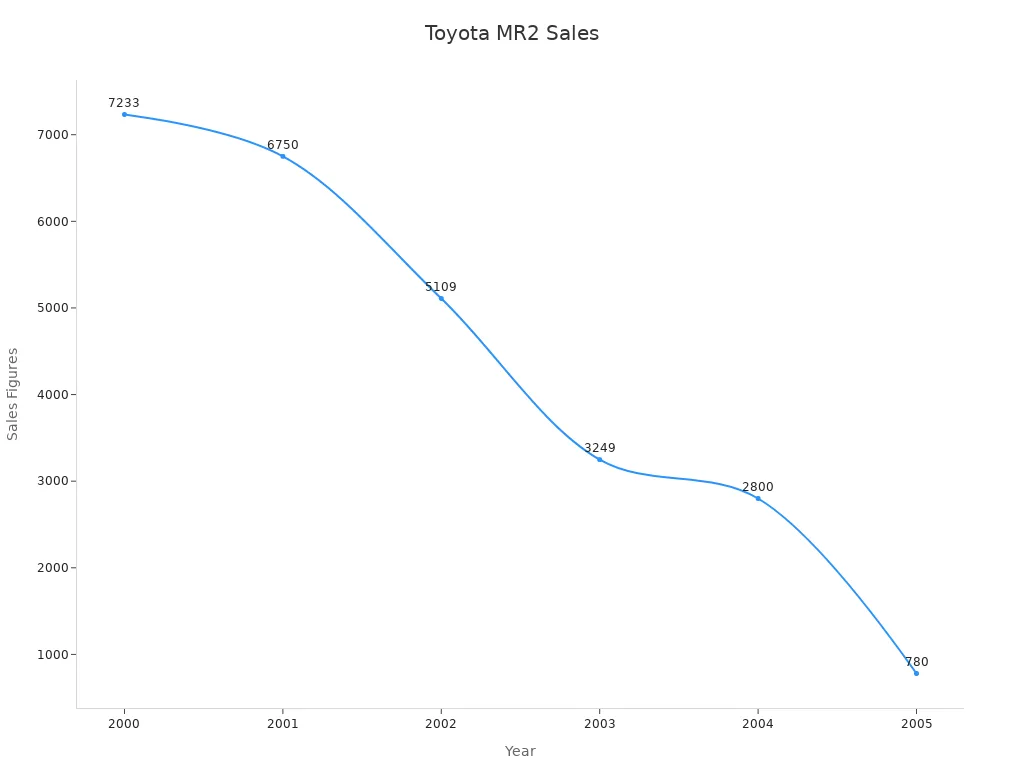
The MR2 Mark III wasn’t as popular as earlier models. But its light design and fun driving style made it an important part of MR2 history.
Market Reception and End of Production
The third-generation Toyota MR2, called the MR-S in Japan and MR2 Spyder elsewhere, got mixed reviews when it came out. Fans liked its light build and fun driving focus. Its mid-engine design and balanced handling made it a hit with people wanting an affordable, sporty car. But some buyers were disappointed by its lower power compared to the older model.
Sales numbers showed this mixed reaction. In North America, the MR2 Spyder started strong in 2000, selling 7,233 cars. Over time, sales dropped, with only 780 sold by 2005. This decline happened for a few reasons. The car had little storage space and only two seats, making it less useful for daily life. Also, more people started buying compact SUVs, which were more practical than small sports cars.
Toyota tried to keep interest alive with special editions. These included the Red Edition in the UK from 2004 to 2005 and the TF300 Limited Edition in 2007. The TF300 was the last version of the MR2, with only 300 made for the UK. These special models had unique designs and features, attracting collectors and fans.
Even with these efforts, the MR2 Spyder couldn’t keep up in the market. Production ended in July 2007, closing the MR2’s 23-year history. By then, Toyota had made 27,941 units for North America. The decision to stop making the MR2 showed how hard it was to sell a small sports car in a changing market.
The third-generation MR2 is still loved by fans for its simple design and fun driving. While it struggled in the market, its light weight and exciting performance made it special. The MR2’s story shows Toyota’s dedication to building cars that are fun to drive.
Toyota MR2 MK1 and Special Editions
Special Limited Versions
The Toyota MR2 MK1 became famous for its cool design and rare special versions. These unique models showed how Toyota could make the MK1 even more exciting. One of the most famous was the V-Edition. This version was only sold in Japan and the UK, with just 1,000 cars made. Its special look and improved performance made it a favorite for collectors.
Another special version was the TF300, sold only in the UK in 2007. Toyota made just 300 of these cars, marking the end of the MR2’s production. The TF300 had fancy badges, better interiors, and improved features. It was a great way to say goodbye to the MR2. These rare versions showed Toyota’s effort to make the MK1 unforgettable for fans and collectors.
| Version | Number Made | Sold In |
|---|---|---|
| V-Edition | 1,000 | Japan and UK |
| TF300 | 300 | UK |
Some places also had turbocharged versions added by dealers. These gave the MK1 more power and made it even more fun to drive.
Differences by Region
The Toyota MR2 MK1 was different in each region, showing how Toyota adjusted it for different drivers. In Japan, it was called the MR-S and had special trims and features. Japanese models often had advanced options like digital dashboards and extra safety features.
In the U.S., the MK1 was sold as a sporty but affordable car. It came with engines like the 1.6-liter 4A-GE, which was powerful for its size. However, U.S. versions didn’t have some of the fancy features found in Japan. Instead, they focused on being reliable and budget-friendly.
In Europe, the MK1 had its own style and upgrades. The UK got special versions like the TF300. These changes showed how Toyota made the MK1 fit the needs of drivers in different places.
The Toyota MR2 MK1 stayed popular because of its rare versions and regional changes. By adding unique features and adjusting for different markets, Toyota made sure the MK1 stayed a favorite for sports car fans everywhere.
The Legacy of the Toyota MR2
How the MR2 Changed Sports Cars
The Toyota MR2 made a big impact on sports cars. It showed that small, affordable cars could still be fast and fun. Its mid-engine design, usually found in pricey supercars, made it stand out. The MR2’s light weight and sharp handling set a new bar for small sports cars. Toyota proved you could have exciting performance without spending too much.
Each MR2 generation showed Toyota’s ability to change with the times. The first model was simple and quick. The second added more power and a smoother ride. The third went back to being light and focused on fun driving. These changes showed Toyota’s creativity and understanding of what drivers wanted.
The MR2 also inspired other carmakers. Its success led to rivals like the Pontiac Fiero and Mazda MX-5 Miata. But the MR2 stayed popular because it mixed speed and reliability. Even after it stopped being made in 2007, people still loved it as a fun and affordable sports car.
Fans and Customization
The Toyota MR2 created a strong fan community that is still active today. Owners and fans share their love for the car through clubs, online forums, and events. This enthusiasm has also boosted the market for custom parts.
Japanese companies like HKS and Blitz make performance parts for the MR2, especially the SW20 model. These include better engines, turbo kits, and improved suspensions. These upgrades show how much people enjoy customizing the MR2. Many owners turn their cars into race-ready machines or unique projects.
- More people are modifying W20 models, showing the MR2’s growing popularity.
- Its great handling makes it a favorite for drivers who love custom cars.
The third-generation MR2, sold under different names worldwide, added to its global fame. While it had less power than earlier models, its light build made it perfect for upgrades. Special versions like the TF300 made it even more appealing to collectors.
| Year | Sales | Notes |
|---|---|---|
| 2000 | 7,233 | Strong start for the MR2 Spyder in North America. |
| 2005 | 780 | Sales dropped due to SUVs and tough competition. |
| 2007 | – | Production ended after 23 years of the MR2. |
The MR2’s story continues through its loyal fans and the many ways to customize it. Its mix of low cost, great performance, and upgrade options keeps it a favorite in car history.
The Toyota MR2 changed a lot through its three versions. Each one showed how Toyota adapted to what buyers wanted. The first version was affordable and fun to drive. It had 145 horsepower and went from 0-60 mph in about 7 seconds. It sold 96,666 cars in the U.S. and Canada, showing its success. The second version added more power and comfort. The Turbo model could go from 0-60 mph in about 5.8 seconds. Sales started strong but later dropped because of market problems. The third version focused on being light and simple. It had 138 horsepower and went from 0-60 mph in about 8 seconds. But sales kept falling as people wanted different kinds of cars.
| Generation | Main Features | Speed and Power | Number Sold |
|---|---|---|---|
| Mk1 | Affordable and fun to drive | 0-60 mph in ~7.0 seconds, 145 hp | 96,666 sold in U.S. and Canada |
| Mk2 | More power and comfort | 0-60 mph in ~5.8 seconds (Turbo), 130 hp | Sales started strong, then dropped |
| Mk3 | Light and simple design | 0-60 mph in ~8.0 seconds, 138 hp | Sales kept dropping |
The MR2’s mid-engine design and sharp handling made it special. It showed that sports cars could be fast and affordable. Its smart design inspired other carmakers and left a big mark on the car world. Fans still love the MR2 for being fun, reliable, and affordable. Its story continues to be celebrated today.
FAQ
What does “MR2” mean?
“MR2” stands for “Midship Runabout 2-Seater.” This name shows the car has a mid-engine design and two seats, which are its main features.
Why is the Toyota MR2 unique?
The MR2 is special because it has a mid-engine design, is lightweight, and handles well. It gives sports car performance at a price many people can afford.
Which MR2 model is the quickest?
The second-generation MR2 Turbo (SW20) is the fastest. Its 2.0-liter turbo engine makes 200-225 horsepower. It can go from 0 to 60 mph in about 5.8 seconds.
Is the Toyota MR2 reliable?
Yes, the MR2 is very reliable. Toyota built it with strong engines and parts. Regular care helps it last for many years.
Is the Toyota MR2 costly to fix?
Fixing an MR2 is not too expensive. Most parts are affordable, but turbo models may cost more. Taking care of it regularly keeps costs low.
Can you drive the MR2 every day?
You can use the MR2 daily, especially the first and third versions. But it has little storage and only two seats, which might not work for everyone.
What problems do MR2 cars have?
Some MR2s, like the second generation, have oversteer issues. All models have small storage space. Regular checks and care can solve most problems.
Is the MR2 good for new drivers?
The MR2 is fun but might be hard for beginners. Its mid-engine design can cause oversteer. Drivers with some experience will enjoy it more.
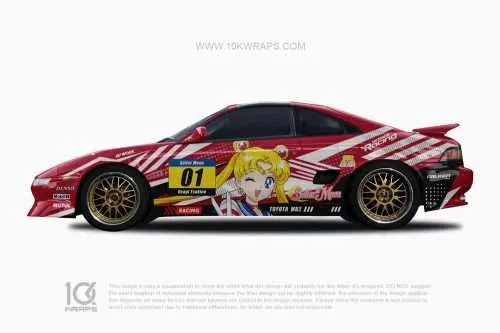
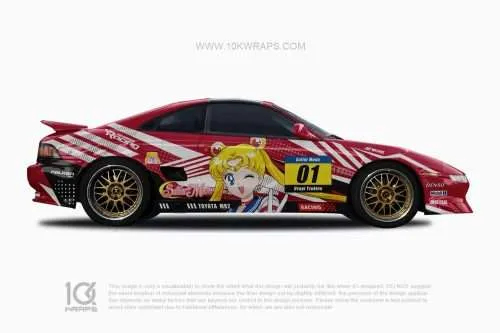
Would you like to get your own custom design wrap for your Toyota MR2 ?
Leave your info we will contact you asap