$500 vs $1,000 vs $2,000 Wrap Budgets: What Results You Can Expect


When you compare $500 vs $1,000 vs $2,000 wrap budgets, you see big differences in what your vehicle can look like. At the $500 vs $1 level, you can expect spot graphics or decals. This budget covers small sections and works well if you want a simple, personal touch. With a $1,000 budget, you step up to partial wraps. You get more coverage and better material, which gives your ride or business vehicle a stronger visual impact. The $2,000 budget brings you close to a full wrap for smaller vehicles. You get premium materials and a custom look that lasts longer. People who choose the $500 vs $1 range often want personal flair or basic business info. If you want your brand to stand out, the higher budget for a wrap makes a bigger difference.
Key Takeaways
-
A $500 wrap budget gives you spot graphics or decals for small spots. This is good for adding personal style or simple business info.
-
With a $1,000 budget, you can get a partial wrap that covers bigger parts. This makes your branding stand out more.
-
A $2,000 budget lets you get a full wrap on smaller vehicles. It uses better materials and gives a custom look that lasts longer.
-
Knowing wrap prices helps you set real expectations and not feel let down by the results.
-
Bigger budgets usually mean better materials and wraps that last longer. This makes your vehicle look better and stay nice.
-
Always check prices at different shops and think about DIY to save money on putting the wrap on.
-
Picking the right wrap depends on what you want. You might want it for your own style or for business ads.
-
Planning for upgrades later can help keep your brand looking the same as your needs change.
Why Budget Comparisons Matter
Avoiding Disappointment
You want your car to look nice and feel worth the money. Comparing wrap budgets helps you not feel let down. Some people think a small budget pays for a full wrap, but it does not. If you do not know wrap prices, you might expect too much. You should learn what each budget can get before you choose.
Here are some common wrong ideas about wrap prices:
-
Many first-time buyers think wraps cost too much, but they are often cheaper than new paint.
-
Some people compare wrap costs to buying a computer for a worker, but wraps can help your business more with ads.
-
You might think all wraps last the same, but better material and work make wraps last longer.
Setting Realistic Wrap Expectations
You need to have real goals for your wrap project. The wrap type, design, and installer all change the end result. If you know what your money can buy, you will not be shocked by the results.
Tip: Always check prices from different shops. Look at shipping, warranties, and return rules. You can also try DIY to save money on putting the wrap on.
The table below shows why it is smart to compare wrap budgets:
|
Factor |
Description |
|---|---|
|
Type of Wrap Material |
Premium vinyl costs more but lasts longer and looks better. |
|
Design Complexity |
Detailed designs increase labor costs. |
|
Partial vs. Full Wrap |
Full wraps use more material and cost more than spot graphics or decals. |
|
Additional Services |
Prep work and accents add to the total cost. |
|
Geographic Location |
Pricing changes based on where you live. |
|
Reputation of Installer |
Skilled installers may charge more, but you get better results. |
How Cost Impacts Results
Your budget changes how good and long your wrap will last. More money usually means better materials and longer life. If you pick a cheaper choice, you may get standard gloss vinyl, which lasts three to five years. If you spend more, you can get special finishes that last five to seven years or more.
|
Vinyl Type |
Cost Range |
Lifespan |
|---|---|---|
|
Standard gloss vinyl |
$500 – $1,500 |
3 – 5 years |
|
Specialty finishes |
$2,000 – $5,000 |
5 – 7 years |
-
Better vinyl stands up to damage better.
-
A pro installer can make your wrap last longer.
-
Your budget should fit your needs for how long and how good it looks.
Knowing wrap prices helps you make smart choices. You can match your money to your needs and not get surprised. When you know how cost changes results, you can plan for the best wrap.
Vehicle Wrap Pricing: $500 vs $1,000 vs $2,000
$500 Wrap: Spot Graphics & Decals
Coverage: Small Panels & DIY
If you have $500, you can get spot graphics or decals. This price lets you wrap small parts like doors or mirrors. You might pick just the hood or a single door. Many people use this amount for DIY projects or to add style. You will not cover the whole car, but you can make some areas stand out.
Material Quality & Durability
At this cost, you get standard vinyl. The material works for simple needs, but it does not last as long as better options. If a pro puts it on, your wrap can last three to five years. Washing by hand and being gentle helps it last longer. Do not use car washes with brushes to keep it looking nice. Pros know how to put on wraps without bubbles, which helps them last.
Visual Impact & Use Cases
A $500 wrap gives your car a basic look. You can use it to show off your style or for simple business ads. Spot graphics are good for small businesses that want to show a logo or phone number. This budget is not for big designs or full wraps, but it is a good way to start. You can try custom wraps without spending a lot.
$1,000 Wrap: Partial Coverage Options
Coverage: Doors, Hoods, Larger Panels
With $1,000, you can get a partial wrap. This price covers bigger parts like both doors, the hood, or trunk. You can wrap about 25% to 75% of your car. Many people pick this for areas that get noticed most. You get more eyes on your car and a stronger message. Partial wraps are a smart way to save money.
Material Quality & Design Flexibility
You get better vinyl at this price. Pros use higher quality material that lasts longer and looks better. You also get more choices for design. You can match the wrap to your car’s paint or add cool graphics. Partial wraps let you put designs on the sides, trunk, or hood. You can pick bright colors or patterns that pop. The designs can be more detailed, but it still costs less than a full wrap.
-
Partial wraps cost less than full wraps.
-
They use less material and work, so you pay less.
-
You can pick how much of your car gets wrapped.
Durability & Visual Appeal
A partial wrap lasts longer if a pro installs it. You get a good wrap that can last five to seven years if you take care of it. The look is bold, which is great for business ads. You can make your car look special without paying for a full wrap. Partial wraps give you a good mix of price and coverage.
$2,000 Wrap: Partial & Full Options
Coverage: Full Wraps for Small Vehicles
With $2,000, you can get a full wrap for a small car or a big partial wrap for a larger one. This price covers almost all of your car’s outside. You can change your car’s color or get a full custom design. The price depends on your car’s size and how hard the design is. Bigger cars or tricky designs can cost more.
|
Vehicle Size |
Typical Coverage at $2,000 |
Notes |
|---|---|---|
|
Compact Car |
Full wrap |
Most surfaces covered |
|
Sedan |
Large partial or full wrap |
May need more for complex designs |
|
SUV/Truck |
Partial wrap |
Full wrap may exceed this budget |
Full wraps usually start at $2,000 and go up if your car is bigger or the design is harder. Always ask your installer about the price.
Premium Materials & Custom Designs
At this price, you get top vinyl from brands like 3M or Avery. The material is the best and comes in many colors and finishes. Pros make sure the wrap fits just right. Custom wraps at this level can have fancy patterns, color fades, and cool graphics. Skilled installers spend more time on the design and putting it on, which costs more but looks amazing.
-
Custom designs need more time and skill.
-
Fancy graphics use more material and take longer to put on.
-
Special wraps help your car stand out.
|
Material Type |
Longevity Impact |
Visual Impact |
|---|---|---|
|
Lasts longer and has better warranties |
Many finishes make your car look great |
|
|
Cheaper Vinyl |
May fade, crack, or peel in 1-2 years |
Fewer looks, may not stay nice |
Longevity & Maximum Impact
A $2,000 wrap lasts the longest and looks the best. A pro install is important for a smooth look and long life. Top materials protect your car’s paint and keep colors bright. If you care for it, your wrap can last five to seven years or more. You get the best branding and a custom look that gets noticed. This level is great for businesses that want to stand out or anyone who wants a cool car.
Note: The price of a car wrap depends on car size, design, material, and install costs. Always ask your installer about warranties and how to care for your wrap.
Wrap Cost Comparison Table
Coverage Differences
You will see big changes in coverage as your wrap budget goes up. At the lowest level, you get decals or spot graphics. These cover small parts of your vehicle, like a door or a fender. If you choose a partial wrap, you can cover larger areas such as both doors, the hood, or the trunk. A full wrap covers the entire outside of your vehicle. This option gives you the most dramatic change. You should think about how much of your car you want to change before you pick a budget.
|
Wrap Type |
Coverage Area |
Budget Level |
|---|---|---|
|
Decals/Graphics |
Small panels/sections |
$500 |
|
Partial Wrap |
25%–75% of vehicle |
$1,000 |
|
Full Wrap |
100% of vehicle |
$2,000+ |
Tip: Start with spot graphics if you want to test a new look or add a logo. Move to a partial or full wrap for bigger changes.
Material & Design Options
You have many choices for material and design at each budget level. Standard vinyl is the most common material for lower budgets. It costs less but does not last as long. Premium material gives you more options, like matte, chrome, or carbon fiber finishes. These advanced material types cost more but look better and last longer. Gloss finishes are the most affordable. If you want metallic or textured effects, you will pay more because the material is special.
-
Standard vinyl material works for simple wraps and basic colors.
-
Premium material lets you pick from many finishes and textures.
-
Advanced material options include carbon fiber, chrome, and matte.
-
Gloss material is the cheapest and easiest to find.
-
Metallic material gives your car a shiny, eye-catching look.
-
Textured material adds a unique feel and style.
-
You can mix material types for a custom design.
-
The right material makes your wrap stand out and last longer.
Durability & Maintenance
The type of material you choose changes how long your wrap will last. Basic films last three to five years. Premium wraps can last up to seven years or more. You should always follow care tips to keep your wrap looking new. Hand washing is best. Avoid harsh chemicals and automatic car washes with brushes. If you pick a higher-quality material, you will spend less time on repairs and touch-ups.
|
Wrap Type |
Cost Range |
Expected Lifespan |
|---|---|---|
|
Full wrap |
$$$–$$$$ |
|
|
Partial wrap |
$$–$$$ |
3–5 years |
|
Decals/Lettering |
$–$$ |
3–5 years |
Note: Premium material not only looks better but also protects your car’s paint and keeps colors bright for years.
Visual Impact by Budget
When you choose a wrap budget, you decide how much your vehicle stands out. The visual impact changes a lot from $500 to $2,000. You want your car or business vehicle to catch eyes, so it helps to know what each budget can do.
$500 Wrap: Simple and Subtle
At the $500 level, you get spot graphics or decals. These add small touches to your vehicle. You might see a logo on the door or a stripe on the hood. People notice these details up close, but they do not change the whole look of your car. If you want a clean and simple style, this budget works well. You can show your brand or add a personal touch without making a big statement.
-
Adds logos, phone numbers, or basic shapes
-
Works best for small businesses or personal use
-
Limited color and design choices
$1,000 Wrap: Bold and Noticeable
With a $1,000 budget, you step up to partial wraps. These cover larger areas like doors, hoods, or trunks. Your vehicle starts to stand out more on the road. You can use bright colors, patterns, or bigger graphics. People see your message from farther away. This level suits businesses that want to get noticed or drivers who want a unique look.
-
Covers 25% to 75% of your vehicle
-
Allows for more creative designs
-
Makes your brand or style pop
$2,000 Wrap: Maximum Impact
A $2,000 wrap gives you the most dramatic change. You can wrap the whole car if it is small or cover most of a larger vehicle. The colors look deep and rich. Custom designs and special finishes make your vehicle hard to miss. You get a professional look that grabs attention everywhere you go. This budget is perfect for companies that want strong branding or anyone who wants a show-stopping ride.
-
Full coverage for small vehicles
-
Premium finishes like matte, chrome, or carbon fiber
-
Custom graphics and detailed artwork
Tip: If you want your vehicle to turn heads, invest in a higher wrap budget. The more you spend, the bigger the visual impact.
|
Budget Level |
Visual Impact |
Best For |
|---|---|---|
|
$500 |
Subtle, basic |
Personal, small business |
|
$1,000 |
Bold, noticeable |
Branding, creative looks |
|
$2,000 |
Dramatic, premium |
High-impact advertising |
You decide how much attention your vehicle gets. A higher budget brings brighter colors, bigger designs, and a stronger message. Choose the wrap that matches your goals and watch your vehicle stand out.
What to Prioritize at Each Tier
Design vs Coverage
You need to decide what matters most for your vehicle wrap. Some people want a bold design. Others want as much coverage as possible. Your main goal should guide your choice. If you want your car to stand out for advertising, a full wrap gives you the biggest change. This option covers every part of your vehicle and makes your brand easy to see. Full wraps cost more and take longer to install, but they offer the most transformation. If you want to save money, a partial wrap can still look professional and deliver strong results. You can focus on key areas like doors or the hood. This approach works well for personal style or small business needs. You should also think about installation costs and how much time you can spend without your vehicle. A full wrap takes longer, which can affect your daily routine or business.
Tip: Always match your wrap choice to your main goal—advertising, personal style, or protection. This helps you get the best value for your investment.
Maximizing Impact on a Budget
You can make your vehicle look great even with a smaller budget. Partial wraps give you a lot of value because they use less material and cost less to install. You can place graphics, logos, or messages in spots that get the most attention. This strategy helps you get noticed without spending too much. Many businesses use partial wraps to show their brand and contact details. You can also pick colors and designs that match your brand identity. A professional installer can help you choose the best layout for your goals.
-
Use partial wraps for cost-effective impact.
-
Place graphics on high-visibility areas.
-
Customize your design for your brand.
-
Work with a professional for the best results.
You do not need a full wrap to make a statement. Smart design choices and good placement can stretch your investment and give you strong results.
When to Upgrade Your Wrap
You should think about upgrading your wrap when your needs change. If your business grows, you might want more coverage or a new design. Upgrading to a full wrap can boost your brand and make your vehicle look new again. You may also want to upgrade if your current wrap shows signs of wear or if you want a different finish. A professional installer can help you plan the upgrade and manage installation costs. Remember, a new wrap is an investment that protects your vehicle and keeps your message fresh.
|
When to Upgrade |
Why Upgrade |
Who Benefits |
|---|---|---|
|
Business expansion |
More coverage, new design |
Growing businesses |
|
Old wrap wears out |
Fresh look, better value |
All vehicle owners |
|
New branding |
Update message, stand out |
Companies, individuals |
Note: Upgrading your wrap at the right time helps you get the most value from your investment and keeps your vehicle looking professional.
Budget-to-Coverage Planner Checklist
Planning Your Wrap Cost
You want to get the most value from your vehicle wrap. Start by looking at the main factors that affect cost. Use this checklist to plan your budget and coverage:
-
Decide how much coverage you need. Do you want spot graphics, a partial wrap, or a full wrap?
-
Choose the type of vinyl. Premium materials last longer and look better.
-
Think about your vehicle’s size and shape. Larger vehicles need more material.
-
Pick a design that fits your goals. Simple designs cost less than complex ones.
-
Find a skilled installer. Professional installation gives you better results.
-
Consider extra services like custom design or wrap removal.
Here is a table to help you see what matters most when planning your wrap cost:
|
Factor |
Description |
|---|---|
|
Material Quality |
Higher quality vinyl costs more but gives better durability and finish. |
|
Vehicle Size & Type |
Bigger vehicles need more material and time for installation. |
|
Design Complexity |
Detailed designs increase labor and material costs. |
|
Installation Costs |
Skilled installers may charge more, but you get better value. |
|
Geographic Location |
Prices change based on where you live. |
|
Additional Services |
Custom design, maintenance, and removal add to the total cost. |
Tip: Write down your goals and budget before you talk to a wrap shop. This helps you get the best value for your money.
Questions to Ask Before Deciding
Before you choose a wrap budget, ask these questions to make sure you get good value and results:
-
How much experience do you have with vehicle wraps?
-
What steps do you take to protect my car during installation?
-
Do you design the wrap in-house or use outside designers?
-
Can I speak with past customers for references?
-
What maintenance does your wrap material need?
-
Do you guarantee your work and offer warranties?
-
How quickly can you finish the job?
These questions help you find a trusted installer and get the most value from your wrap.
Tips for Getting the Best Value
You can save money and get great results by following these tips:
-
Compare prices from different shops. Look for discounts or special offers.
-
Attend car events or trade shows to see wrap options and meet installers.
-
Ask if you can do some steps yourself, like cleaning your car before installation.
-
Balance cost and quality. Sometimes paying a little more gives you better value and longer-lasting results.
-
Explore different vinyl options. Some brands offer better warranties and finishes.
Note: Always ask if the vinyl is made for vehicle wraps and if it comes laminated. This protects your wrap and keeps it looking new.
Use this checklist to plan your wrap project. You will get the best value and coverage for your budget.
Choosing the Right Wrap Budget
Personal vs Business Needs
You need to think about why you want a vehicle wrap. If you want a wrap for personal use, you may want to show your style or protect your paint. A small budget works well for simple graphics or color changes. You can choose a design that fits your taste. If you want a wrap for business, you need to focus on branding and advertising. A professional wrap helps your business stand out. You can add your logo, contact information, and bright colors. A higher budget gives you more space for your message. You get a professional look that attracts customers. Many business owners choose a partial or full wrap to make their vehicles look professional and trustworthy. You should always ask a professional designer for help with business wraps. They know how to make your brand look strong and clear. A professional installer can also make sure your wrap lasts longer and looks smooth.
Tip: A professional wrap for business can turn your vehicle into a moving billboard. This helps you reach more people every day.
Vehicle Size & Usage
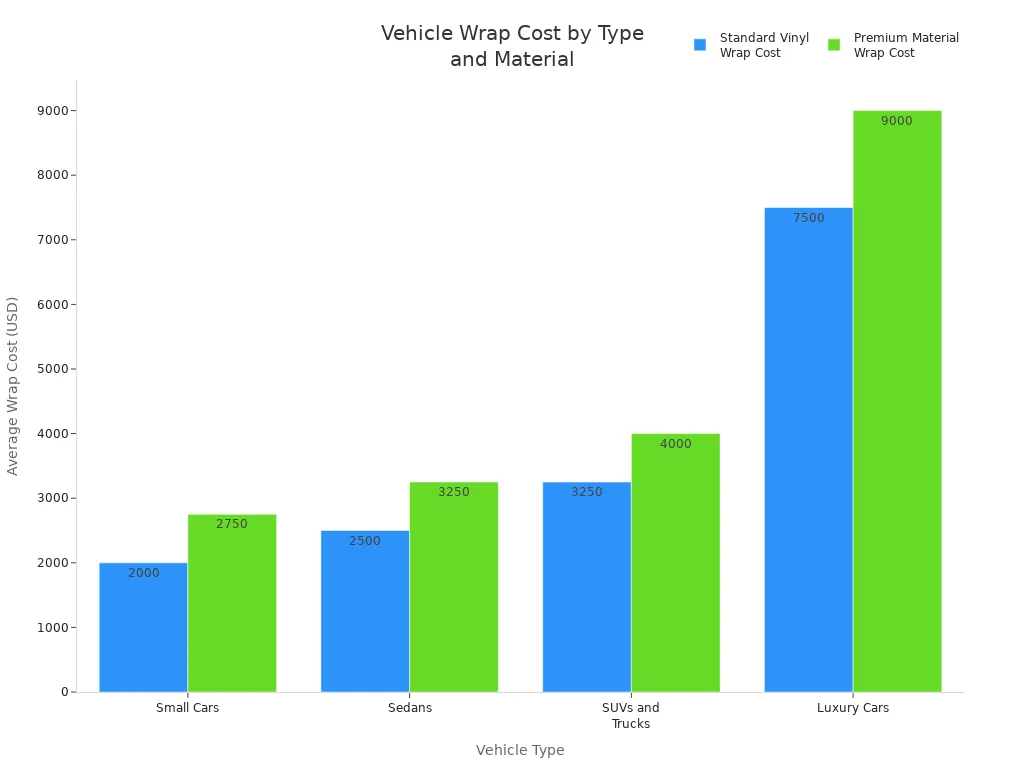
The size of your vehicle changes the cost and coverage of your wrap. Small cars need less material and time. You can get a full wrap for a small car with a lower budget. Large vehicles like SUVs and trucks need more material and work. This adds to the cost. You should check your vehicle type before you choose a budget. The table below shows how costs change with size and material:
|
Vehicle Type |
Standard Vinyl Wrap Cost |
Premium Material Wrap Cost |
|---|---|---|
|
Small Cars |
$1,500 – $2,500 |
$2,000 – $3,500 |
|
Sedans |
$2,000 – $3,000 |
$2,500 – $4,000 |
|
SUVs/Trucks |
$2,500 – $4,000 |
$3,000 – $5,000 |
|
Luxury Cars |
$5,000 – $10,000 |
$6,000 – $12,000 |
You can see that bigger vehicles cost more. The complexity of the vehicle shape also matters. More curves and details mean more work for the professional installer. If you use your vehicle for work, you may want a wrap that lasts longer. A professional wrap with premium material stands up to daily use. If you drive a lot, you need a wrap that can handle weather and road wear. A professional installer can help you pick the right material for your needs.
Note: Always ask a professional about the complexity of your vehicle. This helps you plan your budget and avoid surprises.
Short-Term vs Long-Term Goals
You should think about how long you want your wrap to last. If you need a wrap for a short event, you can choose a basic design and material. This costs less and works well for short-term needs. If you want your wrap to last many years, you need to invest in professional materials and installation. A professional wrap with premium vinyl can last up to seven years. This gives you better value over time. You should also think about how often you want to change your design. If you plan to update your look often, choose a wrap that is easy to remove. A professional installer can help you pick the right option. The complexity of your design also affects how long it takes to install and remove. Simple designs are faster and cheaper. Complex designs need more time and skill from a professional.
-
For short-term wraps, choose simple designs and standard material.
-
For long-term wraps, invest in premium material and professional installation.
-
Ask about the complexity of removal if you plan to change your wrap often.
Tip: A professional wrap with the right material gives you peace of mind and saves money in the long run.
Scalability & Future Upgrades
When you plan your vehicle wrap, think about how your needs might change in the future. You may want to add more vehicles, update your branding, or change your design as your business grows. Scalability means your wrap project can grow with you. You do not have to do everything at once. You can start small and add more later.
Many wrap shops offer options that let you stage your project. You might begin with spot graphics or a partial wrap. Later, you can upgrade to a full wrap or add new graphics as your brand changes. This approach helps you manage your budget and still get the look you want over time.
Tip: Ask your wrap provider if they can match colors and designs for future upgrades. This keeps your fleet looking consistent.
Choosing a vendor who supports future changes is important. Some vendors can handle fleet expansion or branding updates without trouble. They keep your design files and color codes on hand. This makes it easy to add new vehicles or update your look. You do not need to switch providers or start from scratch. Your brand stays strong and looks the same on every vehicle.
Here are some ways you can plan for scalability:
-
Start with a scalable design system. Use simple shapes, colors, and layouts that are easy to update.
-
Choose modular graphics. Decals and spot graphics can be added or removed as needed.
-
Keep design files organized. Make sure your vendor saves your artwork for future use.
-
Plan for partial upgrades. You can refresh only certain panels or sections instead of redoing the whole wrap.
-
Think about future needs. If you plan to add more vehicles, tell your vendor early.
|
Upgrade Option |
Benefit |
When to Use |
|---|---|---|
|
Add decals |
Quick updates, low cost |
New promotions or logos |
|
Partial wrap upgrade |
More coverage, bigger impact |
Business growth |
|
Full wrap upgrade |
Maximum branding, fresh new look |
Major rebranding |
You can also stage your wrap project over time. For example, you might wrap one vehicle this year and another next year. This helps you spread out costs and adjust your design as your business changes.
Note: Planning for scalability gives you flexibility. You can keep your vehicles looking fresh and professional as your needs grow.
Scalability and future upgrades make your wrap investment last longer. You get more value and keep your brand strong, no matter how your business changes.
Start with a Scalable Design System
Benefits of Scalable Wrap Designs
You want your vehicle wrap to work for you now and in the future. A scalable design system gives you flexibility and value. Here are some key benefits:
-
Cost-effectiveness: You pay once for a design that can grow with your needs. Vehicle wraps cost less per impression than most ads. You get design, production, and installation in one upfront price.
-
Brand building: You show your logo, colors, and message on every vehicle. People see your brand again and again. This builds trust and helps customers remember you.
-
Asset protection: Premium vinyl wraps shield your car’s paint from sun, scratches, and weather. Your vehicle stays in better shape for longer.
-
Local market saturation: Your wrapped vehicle acts like a moving billboard. You reach people in your neighborhood every day. More eyes on your brand means more chances for new business.
A scalable design system lets you add new vehicles or update your look without starting over. You keep your brand strong and your costs low.
Planning for Future Add-Ons
You want your wrap to look good for years. You also want it to stay fresh as your business grows. Smart planning helps you get there.
A wrap that stands the test of time is not plain; it is disciplined. It says who you are at a glance, holds together across panels and years, and respects how people actually encounter it on the street.
You should use accurate templates for your vehicle’s make, model, and year. This helps every detail fit perfectly. Your graphics look like they belong, not like an afterthought.
Using accurate templates tailored to the specific make, model, and year of the vehicle allows for careful planning of every detail, ensuring that graphics fit perfectly and look integrated rather than an afterthought.
Think about your wrap as a system, not just a one-time design. Create a toolkit with logo lockups for different panel shapes. Use a limited color palette with clear light and dark pairs. Set headline and detail styles. Plan photo treatments that still look good, even if a door handle or wheel arch crops them.
Design a system, not a one-off: Wraps look dated when they can’t scale. Create a small, durable toolkit: logo lockups for different panel shapes, a limited palette with defined light–dark pairs, headline and detail styles, and photo treatments that still read when cropped by handles or arches.
When you start with a scalable design, you make future upgrades easy. You can add new graphics, update your message, or wrap more vehicles without losing your brand’s look.
Ready to future-proof your investment? Start with a scalable design system and set your brand up for long-term success.
When you compare wrap budgets, you see clear differences. A $500 budget covers basic graphics. A $1,000 budget gives you partial wraps with more impact. A $2,000 budget brings full wraps for small vehicles and premium finishes.
-
Material costs and design choices change with your budget.
-
Labor and installation also affect the final price.
-
High-quality wraps can last up to 7 years.
Ask yourself, is a car wrap worth it for your goals? Start by choosing what matters most—design, coverage, or durability. If you want to begin, outline your needs, set your budget, and talk to a professional wrap shop.
FAQ
Can you stage a vehicle wrap over time?
Yes, you can stage your wrap project. Start with spot graphics or a partial wrap. Add more coverage later as your needs or budget grow. This approach helps you manage costs and keep your design flexible.
How long does a vehicle wrap last?
Most wraps last three to seven years. The lifespan depends on the material quality, how you care for it, and the weather in your area. Premium vinyl and professional installation help your wrap last longer.
Will a wrap damage my vehicle’s paint?
A wrap protects your paint. When you remove it, your paint usually looks the same or better. Make sure your paint is in good condition before wrapping for the best results.
Can you wash a wrapped vehicle?
Yes, you can wash your wrapped vehicle. Hand washing works best. Avoid harsh chemicals and automatic car washes with brushes. Gentle care keeps your wrap looking new.
What is the difference between a partial and a full wrap?
A partial wrap covers only parts of your vehicle, like doors or the hood. A full wrap covers the entire exterior. Full wraps give you the biggest visual change and more space for designs.
How do you choose the right wrap budget?
Think about your goals, vehicle size, and how much coverage you want. Decide if you need a simple look or a bold design. Talk to a professional for advice that fits your needs.
Can you remove or change a wrap later?
Yes, you can remove or update your wrap. Professionals use special tools to take off old vinyl. You can change your design or upgrade to a new wrap when you want a fresh look.
Is a wrap better than paint for advertising?
A wrap gives you more design options and costs less than custom paint. You can show your brand, logo, and message. Wraps also protect your paint and are easy to update.